Data Analytics
Timespan
explore our new search
Microsoft Fabric
Oct 15, 2026 10:20 PM
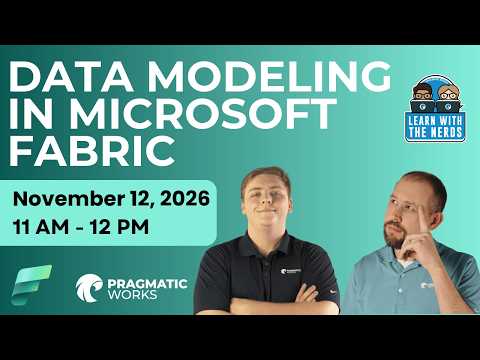
Fabric Data Modeling: Live Workshop
by HubSite 365 about Pragmatic Works
Microsoft expert-led free live workshop on data modeling in Fabric with a YouTube short guide for Power BI insights
Key insights
- Microsoft Fabric
End-to-end analytics platform that combines data integration, engineering, warehousing, and BI in one place. It helps teams build and publish reports without moving data across separate systems. - Semantic model
A business-friendly layer that organizes data into fact and dimension tables, relationships, DAX measures, names, descriptions, and access rules for consistent reporting. - OneLake
Unified storage layer for organizational data that reduces repeated data movement and supports lakehouses, warehouses, and shared semantic models. - Single source of truth
Shared semantic models give teams consistent definitions for metrics like revenue and customer counts, which cuts down conflicting calculations across reports. - Power BI
Integrated reporting and visualization inside Fabric let analysts publish reports and use modeled data without leaving the platform, improving productivity and governance. - Modeling workflow
Start by understanding the business process and defining the grain, then design around star schemas, choose storage modes (including Direct Lake), and plan for incremental refresh and security.
Keywords
free data modeling workshop,Microsoft Fabric data modeling,live data modeling workshop,free Microsoft Fabric workshop,Fabric data modeling webinar,hands-on data modeling Fabric,data modeling training Microsoft Fabric,free live Fabric workshop